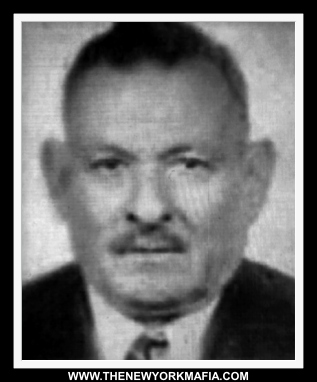
Born in the Sicilian town of Monte San Giuliano, Mike Abati was already a suspected mafioso by the time he left Sicily. Upon arrival in the United States, he quickly made his way to Pennsylvania, where he had underworld connections, and operated there for the next ten to fifteen years before heading west. Abati had already acquired a reputation as a dependable strong-arm man and accomplished killer, and eventually rose to become boss of the San Francisco Crime Family.
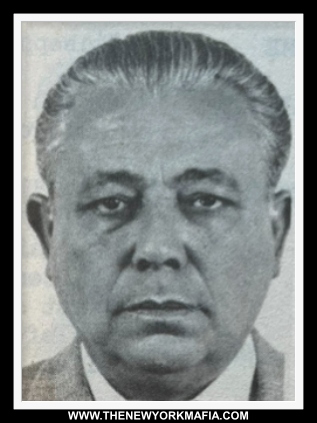
Michele (Mike) Abati – aka Michael Abati, Mr. Mike, Mario Sciata, Mike Savelli, Mr. Bud, Bud Lanolli, Onofrio Savalla, and Lanolli Amofrio – was born on May 1, 1900, in the little Sicilian town of Monte San Giuliano in the Trapani Province to parents Antonino and Maria (nee’ Scudera) Abati.
As a young man while living in Sicily, he met and started courting a young woman from the nearby town of Castellammare del Golfo by the name of Maria Abati (her maiden name was also nee’ Abati.) Mike and Maria would eventually marry but never have any children of their own.
By at least the late 1920s or early 1930s, Abati had already immigrated to the United States, leaving his wife Maria behind who continued residing in her hometown of Castellammare.
Already a suspected mafioso by the time he left Sicily, once on American soil, Abati quickly made his way to the State of Pennsylvania where he had underworld connections. He would live and operate in Pennsylvania with his fellow mafiosi for the next ten to fifteen years until later relocating clear across the country out to California by the mid-1940s or so.
FBI #1716819, San Francisco PD #76271
Abati reportedly stood about 5 feet 7 inches tall and had a medium-stocky build at 165 pounds. He had dark brown eyes, a full head of raven black hair he wore swept back which turned salt-and-pepper by his fifties, and a medium-dark olive complexion. Authorities also say he had a distinct mole on his chin.
His criminal history is a bit murky, so we don’t know if Abati had ever been arrested back in his native Italy. But, what we do know is that to the best that can be determined, his first arrest in the U.S. took place in 1935 when he was picked up and detained in Pennsylvania for criminal investigation. Over the next decade or so, he was arrested several more times in Pennsylvania for armed robbery in 1939 and violation of interstate commerce (interstate theft) in 1944. In 1948, he was charged with homicide.
Since his earliest days, Abati had reportedly acquired a reputation within the Mafia as a dependable strong-arm man and accomplished killer. His violent reputation would serve him well in future years.
Go West Young Man, Go West
With his underworld rep preceding him, immediately upon his arrival in California, he made his way to the City of San Francisco where his fellow mafiosi welcomed him with open arms. Mike quickly assumed a position of prominence within the Bay area’s underworld, specifically the ruling Mafia faction of that city, the Francesco (Frank) Lanza Family.
With Frank Lanza’s help and guiding hand, Mike settled comfortably into the Bay Area and started serving his new boss and the borgata.
Not long after moving to California Abate’s “service” to his boss became painfully apparent just a few years later, in 1948, when he was arrested and indicted along with several other prominent mafiosi for the highly publicized gangland-style slaying of former Chicago mobster Nick DeJohn in San Francisco.
Abati’s co-defendants included fellow San Francisco soldiers Frank Scappatura and Antonio J. (Tony) Lima, Leonard (Lenny Green) Calamia, and Sebastiano Nani.
A Little Trunk Music
Back in May 1947, DeJohn’s beaten and mutilated corpse, with a hemp rope tightly wrapped around his neck, was found in the trunk of an abandoned automobile parked by the San Francisco Marina near the Golden Gate Bridge.
Side Note: A subsequent autopsy report conducted on DeJohn noted that the medical examiner had discovered a single penny had also been shoved up the rectum of the victim. A clear sign that the deceased had either been overly greedy or had robbed someone important within the Mafia fraternity.
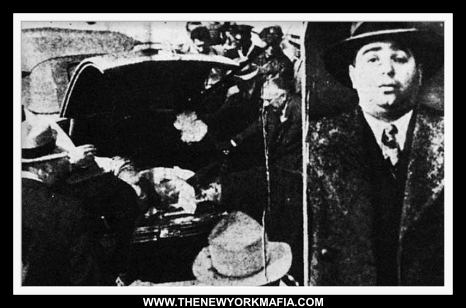
After a long and intensive police investigation, evidence was presented to the San Francisco Grand Jury, which quickly voted for homicide indictments against the five men. And on February 1, 1949, their trial started. But by the time the case finally came to court, only three of the defendants found themselves in the dock: Abati, Calamia, and Nani, with the prosecution dropping all charges against the other two.
After weeks of testimony, the prosecution rested its case, and on March 8, it finally went to the jury. But after thirty straight hours of deliberations, the jury was still undecided on a verdict. So, the district attorney asked that the indictments be dismissed without prejudice, which resulted in Abati and the others being set free.
The New Boss
In the coming years, Abati’s previous credentials back East and the highly publicized DeJohn’s murder, among others, for which he was suspected, would help to better establish him as a man to be taken seriously and aid his ascent up the Mafia ladder.
After the death of Family boss Frank Lanza in 1937, and interim leadership for some years by other mafiosi, Abati was eventually selected as the new leader of the San Francisco Family.
In the eyes of the public and law enforcement, Abati tried to keep a very low-key profile. For many years, he ostensibly listed his legitimate occupation as the plant manager for the Oro Olive Oil Company, Oroville, California.
Years earlier, Lanza had placed his trusty “soldato” on the company’s payroll.
Mike Abati was also reportedly in partnership with fellow mafiosi Frank Scappatura and John Franzone in the Sunland Oil & Cheese Co. Owned by Lanza and his family for decades, Oro Olive reportedly owned an olive-growing orchard which supplied the product for a lucrative olive oil manufacturing and wholesale distribution business that Frank Lanza eventually passed down to his sons Anthony and James Lanza after his death.
Future family boss Jimmy Lanza and his brother later expanded business operations and opened another company, the Lanza Olive Oil Co., located at 559 Washington Street.
During repeated interviews that the FBI conducted with Abati during the late 1950s, agents also learned that Abati resided in a little apartment located within the Oro Olive manufacturing plant.
The Boys in the Band
Among his known criminal associates were the following important members of the San Francisco Family: former boss Francesco Lanza, his son and future boss James (Jimmy the Hat) Lanza, Anthony Lima, and Filippo (Phil) Maita.

Other important associates included such longtime documented family soldiers as Alphonse (Al) La Rocca, Vincent (Vince) La Rocca, Vincenzo Infusino, Vito Bruno, Mario Balistrieri, Salvatore (Duke) Belleci, and Salvatore (Sam) Maugeri.
As a top mafioso, Abati also reportedly kept in close contact with the bosses of California’s two other Cosa Nostra families, the Joseph Cerrito Family of San Jose and the Jack Dragna Family of Los Angeles, as well as the leaders of New York’s notorious Five Families and the Mafia Commission.
Back Home Again
By the late 1950s, the U.S. Immigration and Naturalization Bureau filed a deportation order against Abati seeking to kick him out of the United States. He fought a contentious court battle but in the end, the INS finally won out, and Abati was ordered to leave the U.S. On July 8, 1961, Michael Abati boarded a ship at San Francisco harbor and was sent back to his native Italy.
The Italian Government was notified, of course, and once he set foot on Italian soil, the Carabiniere was ordered to keep him under constant surveillance from that point forward.
Shortly thereafter, word reached his Cosa Nostra brethren that their compare Michael Abati had died of a massive heart attack while still living in Italy, less than a year after his deportation, on September 5, 1962.
Until next time…”The Other Guy”