Danny Fatico was a soldier in the Albert Anastasia Family. Years later, after Carlo Gambino became boss, his brother Carmine became a “Capo di decina.” With this elevation, Carmine soon also elevated his beloved brother Danny to an “acting captain” to watch his back.
The Fatico Regime was to become a very large and active crew that was into nearly everything. There wasn’t much that this bunch wouldn’t indulge themselves in if there was a handy buck to be made in it.
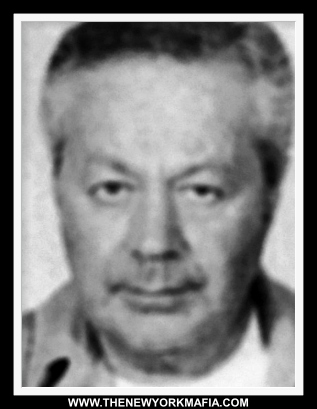
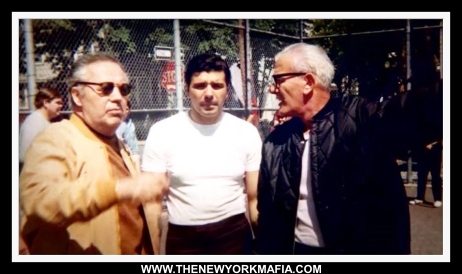
Daniel (Danny Wags) Fatico – aka Danny Wagons, Danny the Head, and Donato Fatico (TN) – was the younger brother of the notorious Carmine (Charlie Wagon Wheels) Fatico. Danny was born on July 10, 1920, in the East New York section of Brooklyn. Early on, the Faticos resided at 160 Mac Dougal Street.
Danny was married by 21 years old, and by the mid-1950s they had migrated a few miles east to nearby Queens County. There, he bought a home for his young wife and three kids at 85-06 102nd Street in the Ozone Park section, right over the Brooklyn-Queens County border. Later, they moved again back to a two-family home in the Sheepshead Bay section of Brooklyn that they shared with their married daughter and son-in-law.
Over the years, Fatico always maintained close ties to the old neighborhood and always kept residences in both areas. Another regular Brooklyn address he resided at was at 92 Schenk Avenue.
The Fatico Crew
The Fatico brothers’ faction, led by Carmine, became a major presence in the Brownsville/East New York and Canarsie sections of the borough.
Danny Fatico would eventually become an inducted mafia member as had his brother. He served as a “soldier” within the Albert Anastasia Family. Years later, after Carlo Gambino became boss, Carmine became a “Capo di decina.” With this elevation, Carmine soon also elevated his beloved brother Danny to an “acting captain” to watch his back.
The Fatico Regime was to become a very large and active crew that was into nearly everything, including bookmaking (horses and sports,) policy-numbers, card and crap games, shylocking, truck hijacking, fencing stolen goods, armed heists and burglaries, strong-arm tactics, contract murder, extortion and shakedowns, labor union infiltration and corruption, counterfeit money and credit cards, narcotics, and the list went on and on.
There wasn’t much that this bunch wouldn’t indulge themselves in if there was a handy buck to be made in it.
The Fatico crew would groom and nurture such future top well-known mafiosi as Anthony (Fat Andy) Ruggiano Sr., John (Johnny Boy) Gotti Sr., Eugene (Gene) Gotti, Angelo (Angie) Ruggiero Sr., Salvatore Ruggiero, John (Johnny Caneg) Carneglia, Charles (Charlie Caneg) Carneglia, Anthony (Roach) Rampino, Wilfred (Willy Boy) Johnson, Anthony (Tony Lee) Guerrieri, Michael (Mikey Gal) Guerrieri, Anthony (Tony Pep) Trentacosta, Albert Maione, Salvatore (Sonny Black) Montella, and Lawrence (Baccala) Abbandando.
There were many, many other top hoods not named. The reader needs to remember that back in that era, the East New York area matched, pound for pound, nearly any other section of the city for density of Italian hoodlums.
The crew operated out of the notorious Bergin Hunt & Fish Club, a private members-only mob social club the brothers ran in East New York. By the mid-1960s, they also operated a second satellite club by the same name after Carmine bought a home out in West Islip in Suffolk County, Long Island.
Side Note: With the migration to Queens of so many crew members after their Brooklyn neighborhood’s ethnicity changed, Fatico and John Gotti decided to relocate the original Brooklyn clubhouse to 101st Avenue in the Ozone Park section of Queens as well.
A Supermarket of Organized Crime
Danny Fatico’s lengthy arrest record dates to 1941 and includes such charges as felonious assault, burglary, bookmaking (13 times,) operating dice games, policy, illegal manufacture of alcohol (operating a still,) vagrancy, running a disorderly house (prostitution activities,) and hijacking.
He received three years probation for an unlawful entry conviction at age 20. Over the next forty years, he would pile up 20 more convictions that included assault, gambling, conspiracy to possess an unregistered still, conspiracy, armed truck hijackings, and fencing truckloads of stolen goods.
But in between all the arrests, the brothers successfully engaged in a veritable supermarket of organized crime.
In 1946, Danny was charged along with an accomplice of repeatedly stabbing a man named John Minutella in the chest and abdomen, and then striking him in the head with a baseball bat after a vicious argument at a card game. Fatico was held on $2500 bail on a charge of felony assault.
Also in 1946, he was nabbed on another attempted felonious assault count for attempting to run down a man by the name of Michael Mintalli. Minatalli accused Fatico of deliberately swerving his car and jumping the curb to try to hit him.
In the mid-1950s, Fatico was charged along with several others for operating a 1,000-gallon alcohol still racket out of an abandoned warehouse at Review Avenue in L.I. City. Danny was indicted on federal alcohol tax violations, manufacture, possession, sale, and conspiracy. It was a lively little racket producing big profits until U.S. Treasury Agents crashed the premises and smashed all the liquor vats and alky-making equipment.
In 1965, the Nassau County Police Vice Squad and U.S. Treasury agents raided a deviant sex bar that catered to homosexuals named The Magic Touch Lounge on Austin Boulevard in Island Park. Fatico was arrested along with John Vignini. At the same time, authorities arrested Gambino soldier Ettore (Eddie Dolls) DeCurtis off a Lower Manhattan street corner.
They were each charged with multiple misdemeanor counts of keeping a disorderly house, conspiracy to keep a disorderly house, conspiracy to violate federal liquor laws, and disorderly conduct.
After an extremely lengthy criminal case that lasted several years to bring to fruition, all three defendants were convicted on all charges. DeCurtis received a one-year sentence (2 counts) to run concurrently, and Danny received a sentence of six months in prison. They were convicted after what turned out to be the longest non-jury trial in Nassau County’s history up to that time. It took over five months to complete before federal judge John S. Lockman.
In 1967, Fatico was arrested again with DeCurtis and an individual later identified as the “Queen Bee,” a term used to describe the popular homosexual man who can attract other “gays” to an entertainment venue such as an underground bar, restaurant, or nightclub. The “Queen Bee” in this case, was John Vignini, who went by the name “Vicious Vivian” and who was arrested with both Fatico and DeCurtis back in 1965.

In a multi-pronged follow-up undercover investigation, the three were indicted on perjury charges relating to an arson probe after the torching of two competing cocktail lounges that also catered to the gay community. The Tradewinds Lounge and the Flame, both located in Oceanside, were badly damaged by Molotov cocktails thrown through the business’s windows to eliminate them as competition for Fatico and DeCurtis’ own Island Park club.
Side Note: In the late 1970s, the Fatico brothers were involved in another major federal case that would later lead to the creation of a very controversial law (named for them) placed on the federal books the government, aptly named a “Fatico Charge.”
The crux of the new law was that if prosecutors deemed it appropriate to apply in certain criminal cases where it was felt that a defendant could be proven to be an “inducted” mafia member, after conviction but before sentencing before the judge, prosecutors could then submit to the court an application to hold a “Fatico Hearing.”
This was a potentially dangerous charge for a defendant to face, because, upon conviction of such a charge, the sentencing judge was then compelled to increase penalties of up to 10 years added to any original sentence he would have handed down. Dangerous indeed!
If granted, prosecutors would then use physical surveillance and audiotapes if available, the testimony of mob informers, FBI Agents and police intelligence experts, and rackets squads to get on the witness stand and testify as to a defendant’s mafia membership. At that point, it was a complete kangaroo court and a stacked deck against any defendant. These “expert” witnesses were typically taken at their word, and it was usually “curtains” after that when standing before the judge.
JFK Hijacking and John Gotti
In 1977, the feds brought a truck hijacking case against the Fatico brothers. Charged as the leaders of an active hijack-theft ring operation preying on freight hauling companies working at the Queens County-based JFK Airport, Danny and Carmine were accused of having orchestrated a series of armed holdups of expensive cargo. They were specifically accused of stealing three truckloads of furs and precious zinc alloy bars from freight trucks out of Kennedy.
After a lengthy trial that ended in a mistrial after a jury deadlock, Carmine and Danny pled guilty in a deal worked out with prosecutors to one count of conspiracy to possess a load of furs from a foreign shipment. The brothers faced a maximum of five years imprisonment and a $10,000 fine.
The main prosecution witness was a former Colombo Family associate named Salvatore Montella, better known as “Sonny Black,” who fancied himself a bit of a tough guy. He was formerly loosely affiliated with Colombo capo Sonny Franzese and his Long Island regime.
After Sonny was imprisoned for 50 years on a bank robbery conspiracy conviction, Montella quickly gravitated to Carmine Fatico and the Gambino Family. He started hanging around the Bergin Club and started bringing street deals to Charlie and Danny Wagons. As soon as Montella got nabbed for operating an unrelated burglary heist ring, he turned rat and offered up the Fatico brothers on a platter to the FBI in the hopes of buying his freedom.
After he hung the mafiosi brothers with his courtroom testimony, he quickly disappeared forever into the newly formed Federal Witness Protection Program, the fledgling “singing rodent” relocation service started only a few years earlier and run by the U.S. Marshall Service.
Before sentencing, the Faticos had objected to their pre-sentence reports labeling them as “made” members of the Mafia, and upper echelon members at that. This court dispute, and the subsequent hearings caused by it, is what would later develop into what became the well-known court proceedings referred to as holding a “Fatico Hearing.”
In 1976-1977 Danny got nabbed by the feds a second time in New York’s Eastern District after a gambling raid on a major floating dice game he operated. Among all the other defendants arrested, Fatico was the only one charged with “maintaining” the game, which is a potentially heavy count.
It was a popular high-stakes crap game frequented by wiseguys across the city where it was not uncommon to see $50,000 and $100,000 wagered on a single roll. Backed by the hierarchy of the Family, top members of the borgata such as Neil Dellacroce and Carlo Gambino himself had been partnered.
Famed prosecutor Thomas Puccio oversaw this criminal case personally. Infamous defense attorney Roy Cohn led the team that represented Fatico. So, it was the big guns out on both sides. Fatico was convicted after a jury trial of operating a high-stakes crap game in federal court. He received three years imprisonment in this case.
After his release from the federal lockup, Fatico semi-retired. His protege John Gotti had since climbed the mob’s ladder under the further tutelage of their underboss Dellacroce, had been formally inducted, and had been elevated to become the capo over their old East New York “Bergin Crew.”
Gotti would go on to achieve mafia infamy as the boss of the entire borgata after he orchestrated the assassination of former boss Paul Castellano in December 1985. Gotti also achieved a life sentence, where he died of cancer seven years later behind prison walls in a maximum-security penitentiary.
As for Daniel Fatico, he died on March 24, 2006, at the age of 86. He was mostly inactive in his last years, having backed up and retired, leaving the Bergin and all that came with it in the hands of his former protege, John Gotti.
Until next time…”The Other Guy!“