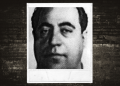
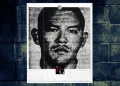
Capo Frank Iaconi ran the rackets in the City of Worcester so smoothly and low key, and so lucratively and successfully without gangland bloodshed, that for over sixty years, his regime prospered. More than that, hardly anybody knew anything about them.
Note: Check out our companion chart. The Iaconi Regime Leadership Chart, for a detailed look at the members of this regime.
First settled in 1673 and incorporated as a city in 1848, the City of Worcester is approximately 38 square miles in size and is situated in the aptly named County of Worcester, smack dab in central Massachusetts.
The city of Worcester (named for Worcestershire, England) boasts a population of just over 207,000 residents. That makes it the second most populated city in all of New England after Boston. When its greater metropolitan geographic territory is considered, the total population exceeds 923,000 people.
The city of Worcester is also situated very closely and conveniently to other major metropolitan areas. Boston is just 40 miles west of it, Springfield is 50 miles to its east, and a mere 40 miles to the north is the city of Providence. Its proximity within central Massachusetts gave birth to its moniker as the “Heart of the Commonwealth”, thus the reason why a heart is the official symbol of the city.

The city boasts many traditional and ethnically diverse neighborhoods that give it a unique and interesting flavor, including sections of the city densely populated with people of Swedish, Irish, Polish, Lithuanian, Jewish, Puerto Rican, and Vietnamese backgrounds. As far as its Italian section goes, the Shrewsbury Street area has always been known as Worcester’s “Little Italy” neighborhood, with Italians comprising approximately 6.5% of the city’s total population.
The “Shrewsbury Street” section boasted a traditional “Little Italy” flavor typical of a miniature New York City Mulberry Street, with many of the city’s most delicious restaurants, cafes, bakeries and nightlife running along its thoroughfare. For many years, it also served as the hub of the city’s Italian underworld.
Dating to the early 1900s, Worcester had its fair share of organized criminals and racketeers. By the early 1920s, a solid contingent of Italians from the Southern Italian mainland started to form into several prominent street gangs. They would soon capitalize on the newly enacted Volstead Act of 1920, which made it a federal crime to import, export, manufacture, transport, sell or consume any form of alcoholic beverages. As thousands of racketeers and gangsters did across the country, so, too, would Worcester’s criminal element gravitate to the illicit alcohol trade; the profits to be had were enormous.
Worcester’s sister city of Springfield would also develop into an underworld bastion. In fact, between the two cities, Springfield was arguably much more prominent as far as the Mafia’s strength and influence went. It’s always boasted a larger contingent of mafia members: leaders, soldiers and mob associates that to this day are still active in the areas rackets.