Around the turn of the 20th century, Syracuse was starting to come into its own. Many early European immigrants who came through New York’s Ellis Island initially settled in Manhattan’s bustling ethnic neighborhoods, crowded with teeming tenements and narrow streets, but soon they began to long for the wide-open spaces of their homelands.
Some moved out of Manhattan into other boroughs like Brooklyn, Queens, Bronx, and Staten Island. Back then, these were largely undeveloped counties with wide open farmland that offered relative peace and tranquility from the hustle and bustle of inner-city life.
But for many others, even the four outer boroughs of New York weren’t enough. Jobs and opportunities were scarce, and the promise of a better life seemed out of reach. Seeking employment and a fresh start, many immigrant families chose to leave the New York City metropolitan area altogether. Some crossed the bridge into New Jersey, while others ventured to nearby states like Pennsylvania, Ohio, and beyond.
For others, though, rural upstate New York held a special appeal. With its wide-open countryside and bucolic charm, it reminded immigrants of the beloved homelands they missed back in Europe.
Among the fastest developing upstate cities included Binghamton, Buffalo, Utica, Schenectady, Albany, Syracuse, and Rochester.
By the early 1900s, the upstate city of Syracuse was already an up-and-coming metropolis with a thriving and diverse population. By the year 1900, it already boasted a population of over 100,000 residents. Over the next several decades, the city’s population exploded even more, doubling in size to 200,000 residents by 1930.
Many struggling immigrants from various ethnicities chose to make Syracuse their new home. The city soon became a diverse melting pot of Irish, German, Polish, Jewish, and Italian families who flocked to the area from downstate New York in search of jobs and a better life for themselves and their children — in search of the so-called “American Dream.”
The Italian “Colony”
The Italians were first drawn to Syracuse in 1883, where they provided day labor for the construction of the West Shore Railroad. At first, they were largely transients, traveling back and forth to the area each day for work and then leaving the city afterward.
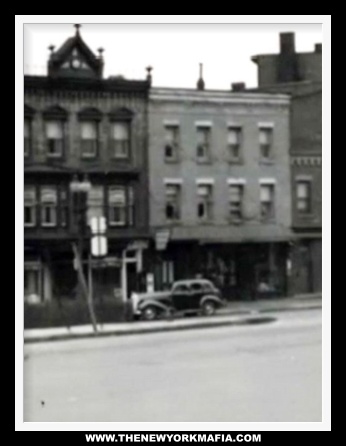
But apparently, they liked what they saw, and slowly but surely, the Italians settled into the city’s Northside section. Over the next two decades, they converted that part of the city into a thriving “Little Italy” stronghold, with Pearl, State, and North Salina Streets becoming the neighborhood’s main business district.
An ever-industrious and visionary people, Syracuse’s Little Italy section was soon teeming with diverse businesses, such as tailor shops, Italian-styled bakeries, little cafes and restaurants, groceries and stores offering Italian delicacies, bars and nightclubs, and other necessary retail-type businesses to support the neighborhood’s infrastructure.
But a funny thing happened to Italians in Syracuse on the way to settling the area. Because of their diverse and unique culture, Syracuse would soon boast not one — but two — Little Italy neighborhoods.
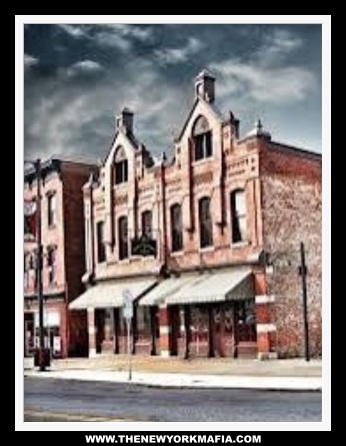
Most Italian immigrants who settled on the Northside came from Italy’s mainland, specifically the southern regions of Campania, Calabria, Apulia, Basilicata, and Molise.
Subsequently, it appears that Italian immigrants from the Island of Sicily didn’t feel as welcomed and comfortable living among their mainland cousins. So many Sicilian families decided to settle into Syracuse’s Westside, converting that section of the city into a second Little Italy — or more appropriately, a Little Sicily.
Likewise, Little Sicily became another thriving area teeming with all the traditions and culture important to their region of Italy. The area buzzed with the sounds and delicious aromas of little bakeries, salumerias, restaurants, and cafes, surrounded by stores and businesses of every kind.
For the Italians, Syracuse was known as their “Siracusa” — a reference to the ancient seaport city of their beautiful Italian homeland.
By this time, Syracuse and its outlying areas boasted a very large Italian population. These two neighborhoods became known as the so-called “Italian Colony.” And despite the significant amount of ongoing discrimination they faced in America during those early years, the Italians were becoming a major force to be reckoned with.
Italy’s Secret Societies
Although most Italians were very industrious and hard-working people, as in all other Little Italys throughout the nation at that time, small pockets of Italian criminals preyed on their own countrymen also existed. These men were not just your ordinary garden variety-type criminals. They were highly “organized” bands of criminals with an ancient structure and long-term objectives.
Alongside the millions of hardworking Italians who came to the United States seeking a better life, some of the world’s most infamous criminal organizations would also arrive.
Most notably, the Mafia — originating from Sicily — was imported directly from its homeland. Not to be outdone by their Sicilian counterparts, the Camorra from Campania and the Società Onorata from Calabria also found their way to American shores.
In keeping with early Italian migration to upstate New York, these three secret societies followed suit, also settling into the various Italian strongholds located throughout the state.
Coinciding with these newfound Italian colonies, the local police soon started noticing a tremendous uptick in Black Hand-styled criminal activities in such key cities as Utica, Rome, Auburn, Saratoga Springs, Albany, Schenectady, Binghamton, Canandaigua, Watertown, Rochester, and the Buffalo-Niagara Falls area.
For Syracuse and the towns surrounding it, such as Eastwood, East Syracuse, Cortland, Fulton, Solvay, Little Falls, and Herkimer, it meant the Black Hand gangs were now fully operational within the territory. In time, law enforcement authorities also came to realize that all three secret societies were operating there, plying their nefarious stock in trade.