One of the easiest and most profitable “semi-legitimate” businesses the mob ever developed was the coin machine racket. Starting right after the repeal of the alcohol Prohibition in 1933, racketeers of all stripes started looking for other revenue streams now that bootlegging liquor was a thing of the past.
Many turned to gambling which had always been around but had never been developed to its full potential as a premier racket. Bookmaking on horses, baseball, basketball, and other sports soon became the “go-to” racket operation many engaged in. It became a popular vocation as bookies accepted bets on nearly everything that moved.
Alongside that was the policy racket or numbers lottery, a hugely popular game of chance mostly played in the poorer sections of the city. The Italians had always run their own lottery with the winning number being drawn weekly from Italy and telexed to the States. There were also punchboards, high-stakes card and dice games, and many other casino-type games.
But among all these variations of gambling, slot machines, or “one-armed bandits” as they were commonly referred to, probably became the simplest gambling racket of all.
New York City became ground zero for the slot machine racket in America. Although many racketeers of all ethnicities and Italian mafiosi alike would profit from slot machines, the biggest and most important mafioso of all had to be Francesco (Frank Costello) Castiglia. He was the longtime “consigliere” and later “acting boss” of the most important Mafia Family in the nation, the Luciano Family.
The iconic Costello was a racketeer businessman of epic proportions and a visionary in several racket fields, not the least of which was the coin-machine racket, most notably slot machines.
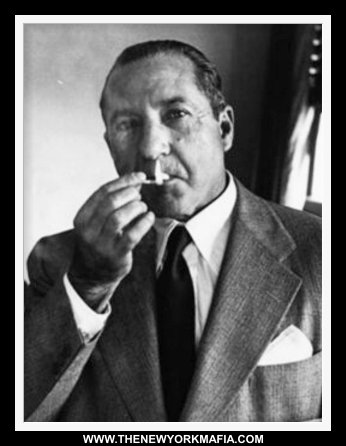
By the mid to late 1930s, Costello unquestionably became the kingpin of the slot machine rackets in New York City. He literally had thousands of these “one-armed bandits” operating throughout the five boroughs. In years to come, he expanded across the country and was partnered in slot operations with many varied racketeers in states as far away as California.
Candy stores, coffee shops, diners, bars, restaurants, pizzerias, dry cleaners, factories, and many other retail locations too numerous to name, not to mention illegal speakeasies, after-hours clubs, and underground slot machine dens all had slot machines for their customers’ enjoyment.
The incentive for the shopkeeper was most often a 50/50 split of the gross revenue the machine brought in weekly. This could amount to a huge payday depending upon the location in question. Some locales were popular enough to support several machines.
In other situations, shopkeepers were sometimes “convinced” to install the machines and received no percentage of the revenue. The business owners were happy to comply so as not to incur a hoodlum’s wrath, to keep on their good side, so to speak.
Often Imitated. Never Duplicated. Button Guys of The New York Mafia...There's Only One!