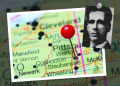
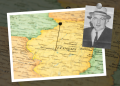
Despite the fact that no one particular Mafia Family or underworld network ever controlled the City of Albany and Upstate New York’s “Capitol Region” and adjoining territories, over the years, a variety of semi-independent racketeers and official Mafia members, alike, all operated within the region. Even before the infamous 1920s “Prohibition Era” took hold, the region’s underworld figures were actively engaged in various criminal racket activities.
But similar to what took place in other cities and states across the country after the U.S. Congress enacted the Volstead Act in 1920 which outlawed the consumption of alcohol, the region’s criminal element gained momentum. Criminals quickly organized themselves into “bootlegging” organizations and set about capitalizing on the newly enacted federal law which now made the simple possession, manufacture, sale, or distribution of any alcoholic beverages illegal and a federal offense.
By the time these Prohibition laws were finally repealed in 1933, many hoodlums and racketeers had made a fortune. This failed “experiment” at controlling liquor consumption had also helped to develop “The Mob” as a monolithic nationwide enterprise that now had real “teeth” and the financial strength from bootlegging profits to expand into other criminal endeavors like the gambling rackets, loansharking, and labor-union penetration.
The City of Albany in Upstate New York and the surrounding “Capitol Region,” as it is widely known, was no different. In fact, the area was ripe for pickings.
Albany had a total population of approximately 100,000 residents. With neighboring towns and villages counted in, the overall region’s total was even more. For instance, nearby Schenectady had a population of 65,000 residents; Troy had 50,000; there were 28,000 year-round residents in Saratoga Springs which also boasted the famous Saratoga Race Track; Rotterdam had 31,000; Guilderland had over 37,000 people; Latham had 17,000, and Cohoes had 18,000.
Within this interlocking mosaic of cities and small towns was an area known as the “Tri-City Area,” a vibrant section that included Albany, Troy, and Schenectady combined. Collectively, today, the overall “Albany Greater Metropolitan Area” boasts approximately 1,200,000 year-round residents who call the area home. So, naturally, it has always been a fertile territory for the underworld to operate criminal rackets.
Yet, despite all its resources and seeming allure, the Capitol District never attracted any one particular “traditional” Mafia Family or organized crime network. Instead, the City of Albany and its neighboring smaller cities and towns became a patchwork of different underworld gangs and small criminal alliances that operated independently of one another, and sometimes in concert with each other, to run and control the area’s bootlegging, gambling networks, and other criminal activities.
Underworld Entities of the Capitol District
Button Guys will be posting a series of hierarchy flow charts that recreates The Capitol District’s many underworld entities over the years, starting from the 1920s and 1930s period.
The most dominant “traditional” Italian Cosa Nostra Families that operated within its territory and seemed to exert a “split-control” of sorts among themselves were the Magaddino, Barbara, and Genovese clans. But over the years, other Mafia networks such as the Bonanno and Colombo Families also nipped at the region’s coattails.
Some of these Mafia clans were represented by a single “soldier” or “associate” who happened to live and operate in that area. Other times, entire small groups or “crews” of hoodlums and gamblers flew the flag of whatever Mafia Family they happened to be affiliated with. But there were many other hoodlums and gamblers that seemed to operate independently of any central authority or mob affiliations.
As mentioned above, the area’s organized underworld was a patchwork of varied racketeers devoid of any one central command. The first underworld gang we examine is that of a notorious racket boss named Louis (Doc) Farone, who headed up a lucrative criminal empire for over forty years in Saratoga Springs, New York.
The Farone Gang of Saratoga Springs, NY
Starting as bootleggers during the Roaring Twenties, what later became known as the “Doc Farone Gang” was headed by Louis (Doc) Farone and his notorious “second in command,” Anthony (Sonny) Pompay.
Operating from their home base of Saratoga Springs, Farone, Pompay, and their gang smuggled branded liquor from over the nearby Canadian border. They also operated their own alcohol-manufacturing “stills” they hid in barns and other rural out-of-the-way locations.