As Button Guys uncovered in Part 1 of our series, France’s underworld, better known as — Le Milieu — was never one single monolithic entity but rather an amalgamation of many smaller criminal gangs and clans varying in size and strength which operated independently and semi-independently of each another on the Island of Corsica and in such mainland cities as Paris, Marseilles, Aix-en-Provence, Cannes, Nice, Grenoble, Lyon and other locations throughout France.
Furthermore, what later became commonly referred to throughout the world as “The French Connection” was in large part a false narrative from the standpoint that they were not one overarching organization — but a loose collection of separate criminal networks and gangs — with the so-called French-Corsican Mafia at the very forefront of it all.
Today, the clans still operate much the same as they always have. They remain active in such diverse traditional criminal activities as gambling and slot machines, loansharking, strong-arm work, extortion, prostitution, jewel thefts, burglaries, armed robbery, bank robbery, drug trafficking, and counterfeiting — to more sophisticated financial frauds and racketeering like international money-laundering and tax-evasion and the deep penetration of the overall economy of the island and mainland France itself, as well as that of such other countries as Belgium, Germany, Tunisia, Algeria, Morocco and Africa, to name a few.
Over the past century, little has changed within Le Milieu. The country’s criminal underworld remains largely unchanged. In fact, today — maybe more so than ever before — the Corsican underworld is even more bloody and chaotic because the various clans are in a deadly fight for supremacy amongst themselves.
As a result of all the mayhem, Interpol and other knowledgeable law enforcement authorities widely agree that Corsica now enjoys the dubious distinction of being the most dangerous and deadly location in all of Europe, with a notorious reputation that even exceeds that of the infamous Islands of Sicily and Sardinia. With gangland murders and underworld violence at an all-time high, Corsica is now considered the ‘murder capital” of Europe.
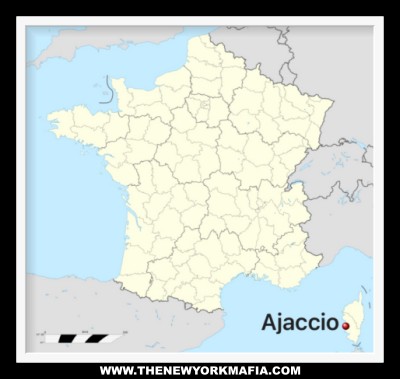
From their headquarters in cities like Ajaccio, Bastia, and several other towns across the island, the Corsican Mafia has now positioned itself to take advantage of France’s multibillion-dollar tourism industry. Through financial investments and sometimes by force, the clans have successfully infiltrated and taken over many of the Island’s hospitality and entertainment venues such as hotels, beach resorts, restaurants, bistros, bars and nightclubs, casinos, and other ancillary types of businesses catering to visitors and the tourist trade.
And this ‘infiltration’ and domination of legitimate industry is not limited to only Corsica; their control is total. Underworld figures have also gained control of these same types of business sectors on France’s mainland, including such precious gems as the cities of Paris, Marseille, Nice, Cannes, Aix-en-Provence, Alpes-Maritimes, Côte d’Azur, Saint-Tropez, and Grenoble, to name but a few.
With that in mind, Button Guys has attempted to create a current hierarchy flowchart depicting the various Corsican Clans and their overall rank-and-file membership, as well as the current underworld situation as it exists today.