Long affiliated with the Joseph Bonanno Family, Smitty D’Angelo was considered a solid guy all his life and was very well-liked by everybody. He had been “straightened out” since the late 1940s and had been upped to “Caporegime” status during the Bonanno War years.
He mostly operated in the Brooklyn and Queens section of New York and had many close associates in all the crews over the years, especially the Bonanno and Profaci crews, which were both prominent in his neighborhood while he was growing up.
Gaetano (Smitty) D’Angelo – Thomas DeAngelo, Thomas DiAngelo, and Gaetano Angelo (TN) – was born on August 9, 1914, in Brooklyn. He and his family lived at 163 Montrose Avenue in the Greenpoint section. He later moved to 220 Bushwick Avenue in Brooklyn.
When he was 29 years old, Smitty married a Bronx girl named Lena Magistro. They would have two sons. By late 1951, he had moved his wife and kids out to 374 Scranton Avenue in Lynbrook in Nassau County on Long Island.
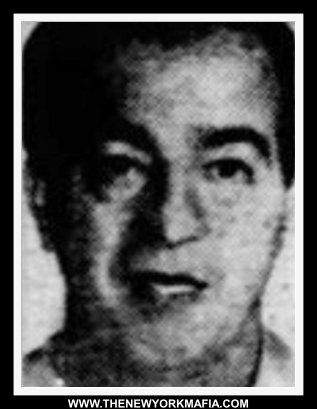
D’Angelo was one of eight brothers. His brother Jimmy was a suspected mob associate and liquor salesman for Peerless Wine & Liquors. Another brother named Anthony owned a funeral home on Graham Avenue in the Greenpoint section of Brooklyn.
His other brothers were Jerome, Joseph, Francesco, Salvatore, and John, all of whom were employed by Alpine or Peerless Liquors which were Profaci Capos Antonio Magliocco’s (Joe’s brother) companies. D’Angelo also had three sisters.
Smitty D’Angelo stood a mere 5-foot 3-inches tall and weighed a solid 150-pound. He had dark brown eyes and thinning brown hair. He was a tough little guy and well-known as nobody to play with.
FBI # 484261, NYCPD # B-95047
A Buckwheats Beating
D’Angelo’s activities included bookmaking, policy, floating dice games, shylocking, extortion, labor rackets, truck hijacking, and strong-arm enforcer.
His legitimate employment was listed as a partner in the D’Angelo Buttonhole Shop at 175 Montrose Avenue in Brooklyn. In 1960, he had been a “trustee” of Local # 875, International Brotherhood of Teamsters (Independent.)
He was a close personal friend and associate of Profaci members Sebastiano (Buster) Aloi and John (Sonny) Franzese and fellow Bonanno member Salvatore (Sally Burns) Morale.
His additional close associates included the following:
- Frank (Frankie T) Mari – Friend, associate, and long-time soldier from downtown New York; top gunman and enforcer for the crew. He would later rise to acting boss in an attempted coup only to be killed shortly thereafter
- Steve Menna – A boyhood friend with whom he was allied all his life. He later was inducted as a Bonanno soldier.
- Michael Consolo – Another key Bonanno member and friendly for years with Smitty; they shared territory.
- Samuel (Hank) Perrone – He came from the same neighborhood as Smitty. They had been friends but would end up on opposing sides in the Banana War.
- John D’Angelo – His brother (NYPD B-487656.) He may have been a soldier also, certainly at least an associate of his brother and the crew.
- Albert Sabella (NYPD #B-487626,) Sylvester Bruno (NYPD #B348958,) Anthony Veltri (NYPD #B-465270,) Frederick Massa (NYPD #B-463022,) and Ralph Marino (NYPD #B-349692) who were all under Smitty and in his crew.
- Vincent Aloi – Top Profaci member and the son of Buster Aloi. Vinny was a “KG” with six gambling arrests.
- Biagio Restivo – Old-time soldato in the borgata. Biagio owned the Restivo Bread Co. in Corona, Queens for many years. He was the father of future soldier Louis Restivo.
- Ernest (Cutface) DeVito – A reputed member of either the Gambino or Genovese Family, shylock, and thief.
- Salvatore (Sally Burns) Morale – A soldier and brother of top capo John Morale, downtown Mulberry Street shylock, and mafioso.
Smitty D’Angelo’s criminal record started in 1931 and reflected arrests for the following:
- 1931 – robbery (Elmira Reformatory)
- 1933 – assault and robbery, grand larceny
- 1934 – attempted grand larceny (2.5 years in Sing Sing)
- 1961 – consorting with criminals
- 1961 – consorting with criminals
- 1962 – consorting with criminals
In 1945, D’Angelo was accused of collecting labor kickbacks of from $5.00 to $10.00 per day from each carpenter working at the Brooklyn Army Base employed by M.P. Smith & Sons Inc., which manufactured stevedores.
In 1956, Smitty and his partner Sally Burns loaned $3,000 to a group of hijackers who’d swiped a load of woolen piece goods and needed an advance until they dumped the load. He was known to back cargo hijackers in their endeavors.
In 1957, Smitty was named as one of the hoods who had shaken down a lesser hoodlum for having been saved from receiving a beating he was due. He owed the shylock money. Smitty and company got the shy off his back and then advised him they wanted a fee for saving his ass. He paid!
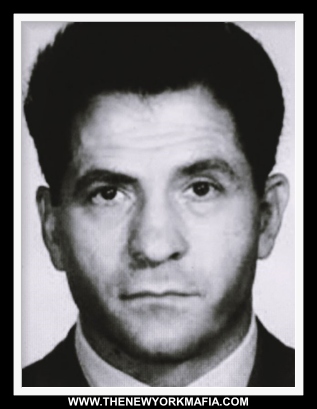
In 1960, D’Angelo was named a major “fence” for local truck hijackers who would utilize him to dispose of the “swag” loads of merchandise. In 1961, he was nabbed outside the Victory Social Club on Gates Avenue in Brooklyn and arrested for consorting with known criminals. A crap game was suspected to be run at that location.
In 1962, he had been instrumental in the “buckwheats” beating of an Irish bettor named Joe Cannon who had tried to welch on a debt owed to a mob-connected bookmaker named Joseph (Joe Chink) Fiore. The bookie appealed to D’Angelo and Sonny Franzese for help. D’Angelo and two others gave Joe Cannon a merciless beating in front of Franzese to send a message out that you better pay your debts. They nearly crippled him! From that point forward, Fiore was under their “wing” and paid $200 a week protection money, which D’Angelo and Franzese “whacked up.”
A Solid Guy
Long affiliated with the Joseph Bonanno Family, Smitty was considered a solid guy all his life and was very well-liked by everybody. He had been “straightened out” since the late 1940s and had been upped to “Caporegime” status by the time of his death.
He owned a hidden piece of The Enchanted Hour Cocktail Lounge on Wyckoff Avenue in the Ridgewood section of Queens. This location was known to hold high-stakes dice games in the basement, and Smitty also operated a horse “book” out of the place.
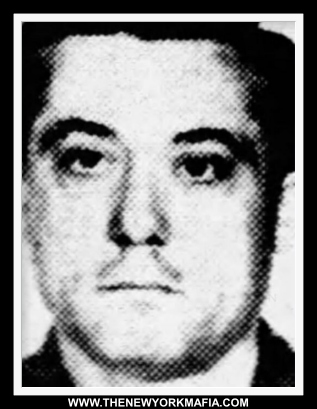
Smitty D’Angelo mostly operated in the Brooklyn and Queens section of New York. He had many close associates in all the crews over the years, especially the Bonanno and Profaci crews, which were both prominent in his neighborhood while he was growing up.
He was also believed to have been a principal in a numbers-lottery ring active in the area. His partner, Frank (Frankie the 500) Telleri, was a well-known policy banker who was alleged to be one of the larger numbers racketeers covering the neighborhood.
The Banana War
By mid-1965, tensions were starting to run high within the ranks of the Bonanno Family. There was disharmony forming because of the perception that boss Joe Bonanno was playing favoritism with certain key members of his borgata at the expense of the rest of the rank and file.
Originally a staunch supporter of Bonanno, by 1966, Smitty was one of many soldiers and captains who would start to defect to a rebel faction that had formed. D’Angelo and Telleri had first lined up behind Gaspare DiGregorio, who had been selected to succeed Bonanno by a vote of the Family Captains and backed by the Commission, and later backing his successor Paul Sciacca.

For his support, D’Angelo had been bumped up to capo, and by early 1967 in a realignment of the hierarchy, he was said to have been newly selected to rule within the three-man hierarchy. He was suspected of having been elevated to the consigliere position.
Well, news travels fast, and bad news even faster. Soon, Bonanno and his faction members got wind of the newest designs to capture his throne, and he decided to make a statement once and for all to whoever would dare challenge him.
On November 10, 1967, Smitty D’Angelo, his brother Jimmy, and his close buddy Telleri were all machine-gunned to death at the Cypress Garden Restaurant in the Ridgewood section of Queens.
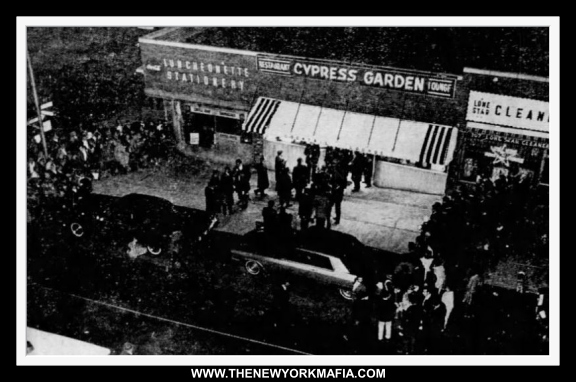
Having just settled into a side table at the small neighborhood, family-style eatery and looking forward to a nice hot meal, a lone gunman strode in through the open back kitchen door entrance and walked down the kitchen aisle, quietly entering the small drape-covered dining room. He swung his long trench coat open, raised a short Tommy gun, and let go several quick short bursts of firepower that tore through the three hoodlums as several other tables of diners ducked for cover. It was all over within seconds. Blood was splattered everywhere as the three were lying dead on the floor.
It was later revealed that the number one prime suspect in the shooting was a little-known Bonanno relative and recent immigrant to America named Gaspare Magaddino. He was well-known as a top mafioso in his native Sicily. It was said that he had been Capo of the entire Castellammare del Golfo cosca.
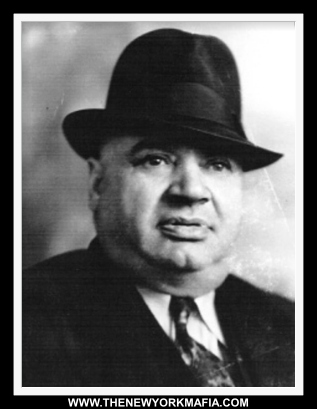
He’d initially immigrated up to his cousin Stefano Magaddino in Canada and had later chosen to join his other cousin, Joe Bonanno, down in New York City to help quell the insurrection.
This triple-gangland murder hit the front pages of all the tabloids.
Side note: Gaspare Magaddino would end up being killed by a shotgun blast to the head and neck while he was walking down a Brooklyn street in April 1970.
The Most Significant Killing
There were several other high-profile shootings and attempted killings in the months to come including that of Pietro (Skinny Pete) Crociata, a highly respected old-timer who had just recently been elevated to be Sciacca’s underboss. He was shot and hit four times as he sat in his car on a Brooklyn Street.
He would survive but was out of commission after that and faded from the scene. Considered a mafioso who was very savvy and knowledgeable about the rules of Cosa Nostra, Crociata’s shooting was a major blow to the rebels who had counted on his wise counsel during this conflict.
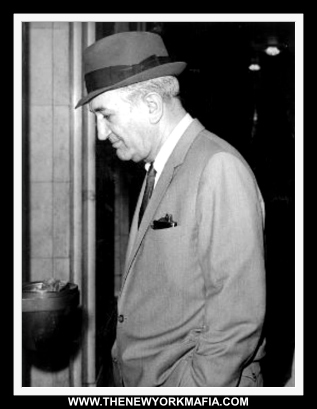
Through all of 1967 and 1968, what became known as the “Banana War” would rage most heavily. But by 1969 to 1970, the fighting and turmoil would simmer down. Joe Bonanno, his son Bill, and their loyal followers had conceded defeat and were deposed from the Family leadership. Bonanno retired to Tucson, Arizona with approximately 20 of his minions in tow.
Of all the casualties of the gang war, the Cypress Gardens bloodbath was by far the most significant killing of the conflict. I know that several people close to me mourned Smitty. They had liked him and had been partnered with him in several ventures over the years.
It was a shame. In fact, these types of conflicts usually are a shame and a waste of good men for no good reason. Greed, pride, and hardheadedness too often lead the day costing many lives both in bloodshed and jail!
Until next time…”The Other Guy!”