

“Too many prosecutors focus on those criminals that are relatively easy to bring to justice instead of those who should and must be apprehended for society’s safety. These criminals include not just the kingpins of organized crime but those who bleed society by consumer fraud, price fixing, collusion, and restraint to trade.”
– Denis Dillon during his 1974 campaign for Nassau County District Attorney
Once described by a fellow prosecutor as “absolutely incorruptible,” Denis Dillon spent his entire career fighting crime in New York, with much of his early career being a racket buster against organized crime. One of his favorite targets was Joe Colombo Sr., the boss of the crime family that still bears his name.
But when Dillon arrested Colombo’s son, Joe Jr., in 1970, Colombo turned the tables around and waged his own war against the very institutions meant to bring him down with the creation of the Italian-American Civil Rights League (IACRL). Later, other notorious mobsters from all Five Families, fellow prosecutors, and even a federal judge also found themselves in Dillon’s crosshairs.
Born on December 21, 1933, in the Bronx, New York, Denis Dillon embarked on his crime-fighting journey by joining the New York City Police Department in 1955, while at the same time attending Fordham School of Law at night.
After graduating from law school in 1962, he was hired as an attorney by the U.S. Justice Department’s Civil Rights Division assigned to Alabama, Georgia, and Mississippi. In 1966, he became an Asst. U.S. Attorney for the Eastern District of NY. In 1969, he became the Assistant Director of the Organized Crime Strike Force for that same district.

In 1970, Dillon was promoted to director of that same Organized Crime Strike Force and later claimed to have secured 498 convictions against prominent organized crime figures in the four years he held that position. It was an accomplishment that pushed Dillon’s strike force to the top of the heap and earned him praise from then-U.S. Attorney General Elliot Richardson.
In 1973, Richardson had initiated an evaluation of the 18 organized crime task forces around the country, with intentions to either eliminate or restructure those offices due to poor performance and failure to make any “meaningful organized crime cases.” At the time, newspapers reported that Dillon’s task force was the most consistently active in the nation, and in 1972, had “turned in the best performance record with indictments against 229 people and 116 convictions.”
Joe Colombo’s Arch-Nemesis
One of the most notorious indictments Dillon was involved with, and the one that eventually caused a cataclysm for law enforcement and the underworld, occurred in March 1970, the same year he was promoted to chief of the Organized Crime Strike Force in Brooklyn.
Joe Colombo claimed for years that he was nothing more than a real estate salesman. But authorities didn’t buy it. On March 6, 1970, he was indicted and charged with perjury for lying on an application for a real estate license. Only weeks later, on March 24, 1970, Colombo was indicted once again, this time charged with cheating the government out of $19,168 in taxes from the years 1963 through 1967.
At the time, Dillon told newspapers that Colombo belonged to “an exclusive country club where he hobnobbed with bankers, brokers, and business tycoons and that his neighbors know him as a horse breeder, a gentleman farmer, and a real estate dealer.”
On April 9, 1970, Colombo pleaded innocent to the tax evasion charges, and that’s when all hell broke loose.
On April 30, 1970, authorities arrested Joe Colombo’s son, Joe Jr., and fellow Colombo soldier Joseph Iannaci as well as three others for illegally conspiring to melt down $200,000 worth of silver coins into ingots and then sell them for profit. When Joe Sr. learned about the arrest, he blew a gasket.
In an unusual and now legendary move, Joe Colombo turned the tables on Denis Dillon and the FBI by gathering about 40 friends and family to picket and protest Joe Jr.’s arrest in front of FBI headquarters in Manhattan. Nobody had ever seen anything like it, especially federal authorities. And it was the tip-off to a very volatile standoff between the government and Joe Colombo, and the catalyst for the creation of the Italian-American Civil Rights League.
The Harassment Begins
According to the book, Colombo: The Unsolved Murder by Don Capria and Colombo’s eldest son Anthony Colombo, soon after the unprecedented protest at FBI headquarters in April, Dillon and an FBI Agent by the name of Ray Tallia visited the Cantalupo Realty offices looking for Joe Sr. He shared the following story:
Before he could even ask for Joe, Anthony Colombo, wielding a silver spy camera walked right up to Dillon and snapped a photo of him. Before Dillon could even process what just happened, Anthony slid apart both ends of the tiny camera and snapped it again. Dillon was outraged and yelled, “Who is this guy? What is he doing here? He can’t take pictures of me! Arrest him!”
Tailla asked, “Arrest him for what? Taking pictures?! It’s not a crime.”
Dillon yelled, “I want to know who this person is!”
Anthony offered his business card and informed him, “I’m the Vice President of the Italian American Civil Rights League.” Tallia explained to Dillon, “This is Joe Colombo’s oldest son.”
Joe Colombo stepped out of his office to see what the commotion was. Dillon, overwrought, turned to Joe, “What kind of respect is that? What do you teach your children? I’m a United States Attorney.”
Joe replied calmly, “He’s not doing anything to disrespect you. My son is the Vice President of the Italian American Civil Rights League and taking pictures is part of his job.”
Dillon asked incredulously, “That’s his job? Taking pictures?”
(Joe replied:) “He is supposed to document any suspected case of harassment against Italian-Americans, so yeah, that’s his job.”
Dillon was clearly unable to compose himself, so Tallia grabbed him by the suit coat and guided him to the exit. “Come on Dennis, let’s go.” Dillon shook off Tallia and stormed out of the realty offices, seething with rage and embarrassment.
As he exited, he cast a final glare at Anthony assuring him that this event would not be forgotten.
The Silver Ingot Case
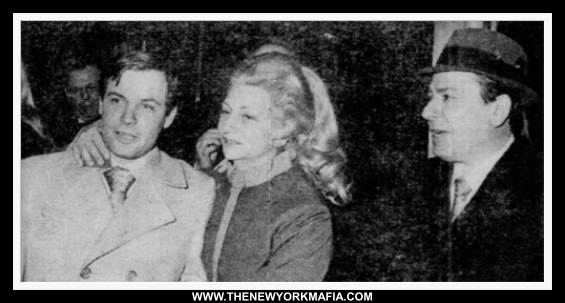
In February 1971, Joe Jr. and the others went on trial for the silver ingot case.
Joe Colombo Sr. had been convicted of the perjury charge in December 1970 and was scheduled to be sentenced the same day the defense called for Joe Jr.’s case to be dismissed. It was two weeks into the trial, and the prosecution’s star witness, Richard Salamone, a coin shop owner who was one of the other men arrested in the case, testified that he had lied to the grand jury. His testimony had led to the indictment.
Under questioning by U.S. Attorney James Drucker, Salamone testified that Colombo Jr. didn’t know anything about the scheme because he never told Joe Jr. that the money was going to be used to purchase and then melt silver coins.
When Drucker asked why he lied to the grand jury, Salamone testified, “I had to more or less think up a story because I had to satisfy the FBI because they were looking for a case, and I was forced not to even call an attorney for the matter.”
He added that the FBI made promises to him and gave him money. “This is why I was pinned against the wall,” he said. “I was losing my store, and the FBI were the first people to come around and help.”
On February 26, the Colombo Family headed to court for the trial’s final day and sat in the front two rows of the courtroom. According to Anthony Colombo in his book, when the family got up to leave during a lunch break, Dillon supposedly said to FBI Agent Tallia, “You better get the exterminator and fumigate these pews!”
Anthony became upset and, along with attorney Barry Slotnick, went to Dillon’s office to register a complaint against him on behalf of the IACRL. Newspapers reported that while the jury was still deliberating about Joe Jr., Dillon went into the courtroom and told the judge, “Twenty minutes ago, Barry Slotnick came to my office with approximately six or seven other persons who were uninvited” and were “boisterous and yelling.”
He said he slammed the door and when he emerged later, they were all still there “loitering” in the hallway. He then claimed that the “subjects threatened us in the hall and on the elevator and that one of the men called out, “How do you want it – with a knife or a fist?”
The courtroom erupted with Anthony Colombo, raising his hands in protest until the judge ordered them all to calm down.
But in his book, Anthony Colombo tells a different story. He says that when Dillon opened the door to his office, he saw his father’s picture on the wall with darts sticking in it. And after Slotnick finished with what he had to say, Dillon said, “Are you finished?” and slammed the door in his face.
As they were waiting for the elevator, Dillon and Tallia came out of the office and joined them on the elevator. In the elevator, Tallia told Anthony, “I’m going to get you,” to which Anthony responded, “You’re going to get me? You take your best shot, Ray. Any way you want it, guns, fists, or knives.” A pushing and shoving match then ensued before the doors opened and Dillon marched into the courtroom to tell his side of the story.
Later, the jury returned and acquitted both Joe Jr. and Joseph Iannaci. Joe Colombo Sr., by the way, was sentenced that March to two and a half years in state prison for his perjury conviction.
A Red-Faced Dillon
In March, the IACRL staged a protest at the offices of the Staten Island Advance accusing them of discriminating against Italians for using the words “mafia” and “cosa nostra” in their stories. Denis Dillon, still red-faced from the acquittal, launched a grand jury investigation not only about the protests claiming that “one of the newspaper’s trucks and 8,000 newspapers were burned” as well as a “driver and his assistant beaten up,” but also the elevator incident with Anthony Colombo the previous month.
Joe Colombo appeared before the grand jury answering all questions posed to him about the Staten Island Advance protests and other matters. When he emerged from the courtroom, he told waiting reporters, “I don’t care if they indict me and I’m found guilty. I’ll go to jail for the maximum – the maximum, not the minimum. But when they frame my boy, I don’t go for that.”
Nothing ever came out of that particular grand jury investigation. But that didn’t stop Dillon from pursuing his target, and he doubled down with a vengeance.
In April 1971, Joe Colombo and 30 others were arrested on gambling charges for operating a multi-million dollar policy racket. He had just been named Man of the Year at a banquet held by his own Italian-American Civil Rights League.
At his bail hearing, Dillon accused Colombo’s attorney, Jacob Lefkowitz, of putting a tap on the U.S. Attorney’s office phone because Colombo already had a heads-up about the impending arrest.
Lefkowitz responded, “That’s right. There was a leak. There was a tap on your line, Mr. Dillon. That’s how we knew.” He added that Dillon had been “directed by Heinrich Himmler Mitchell” (Attorney General John Mitchell) in demanding the Court set a $100,000 bail for Joe Colombo. He was then released on a $25,000 bail.
After leaving the courthouse, Colombo told waiting reporters that the arrests were part of a “plot against every free-born American citizen,” adding, “They’re everywhere we are. They’ve even bugged our bedrooms. And I say our bedrooms today, yours tomorrow.” He also claimed it was retaliation for picketing the FBI headquarters and everything that followed, including a very successful rally that previous summer with another one planned for that June.
The week prior to the arrests, Colombo had challenged Dillon and Mitchell to “come and get us” if they could prove he was guilty of a crime. Dillon had accused the IACRL as being a front for a loansharking operation and that their receipt records of donations were nothing more than loanshark records.
Once again, Dillon’s probe fell flat. The FBI had been getting their information about the IACRL being a loansharking front from Greg Scarpa Sr., their years-long secret informant and couldn’t risk exposing him. Thus, Dillon had no case.
In fact, although Dillon claimed the gambling arrest marked the “first major move by the government against organized crime under the Organized Crime Control Act of 1970,” the only overt act by Colombo was that he had a conversation with two women from the office about the donations.
Nothing ever came of this arrest either as far as Joe Colombo was concerned. He was shot three times in the head and chest that June 28 at the second Italian Unity Day rally and never recovered, paralyzed and bedridden for the rest of his life. He died seven years later on May 22, 1978.
As a side note, in his book, Anthony Colombo wrote that just two weeks prior to the rally, Brooklyn D.A. Eugene Gold issued a warrant for 46 suspects in NYC on a contempt of court investigation that took place back in 1968. Dillon decided to place several mobsters under 24-hour surveillance, including Carlo Gambino, Tommy Ryan Eboli, Carmine Tramunti, and Joe Colombo. But only a few days later, Dillon told another attorney in his office that they were pulling surveillance off Colombo. When asked why, Dillon’s response was that there were no new developments, but they were “just not protecting Joe Colombo at this time.”
Dillon, Matty the Horse, and the Crown Jewels
Dillon’s pursuit against organized crime wasn’t just focused on Joe Colombo. He was involved in the Operation Flanker probe where 80 people, including Bonanno acting boss Paul Sciacca and soldier Michael Casale, were arrested for conspiracy to distribute 71 pounds of heroin valued at more than $13 million. Interestingly enough, the entire probe was headed by none other than U.S. Attorney General John Mitchell, who had previously ordered, due to pressure from Joe Colombo and the IACRL, all of his offices and law enforcement to refrain from using the word “mafia” in any criminal probes.
After the murder of Crazy Joe Gallo in 1972, Dillon pulled in Genovese capo Matty Ianniello for questioning. Ianniello held hidden ownership in Umberto’s Clam House where the murder took place. Dillon wouldn’t elaborate to the media on what Ianniello was questioned about or what his answers to the questions were.
Also in 1972, he was part of the investigation along with his future nemesis Nassau County D.A. William Cahn into the kidnapping and murder of Carlo Gambino’s nephew Emmanuel Gambino and the attempted kidnapping of Lucchese Family associate Vincent Papa’s son, Vincent Papa Jr., and was involved in the investigation of Paul Vario’s criminal activities at his Canarsie junkyard for which he was eventually convicted and sentenced to life.
In January 1973, $350,000 worth of crown jewels from the Regina Pacis Roman Catholic Church in Brooklyn were stolen. This was the same church where a similar theft took place in the 1950s while Joe Profaci’s was the boss of the Colombo (then Profaci) Family.
Dillon received a phone call from John Malone, director of the FBI in New York, letting him know that a “mob loyalist” had telephoned him with the location of where the jewels could be found after they were recovered, apparently, by members of the mob. Malone told newspapers that the FBI followed protocol in informing Dillon of the situation and that “organized crime” was “instrumental” in recovering the stolen jewels. What’s interesting is that newspapers also reported that Malone refused to “identify organized crime as the Mafia or any other term” – a clear indication that the government wasn’t willing to test the limits of the IACRL, even though Joe Colombo was in a coma at the time, and the IACRL was beginning to wind down without his leadership.
Later that year, Dillon opened an investigation into the allegations that there was a suppression of evidence in Sonny Franzese’s 1967 bank robbery case where he was sentenced to 50 years. Obviously, nothing ever came of those allegations – at least in a court of law. But later, after Sonny was paroled, Dillon managed to violate Sonny on parole violations and sent him back to prison for a while.
But mobsters weren’t the only ones in Denis Dillon’s crosshairs.
Dillon Has a Bone to Pick
In September 1973, Brooklyn federal judge Mark Constantino accused Dillon of running a “smear campaign” against him. The Justice Department had opened an investigation against Constantino after Dillon fed them information that accused Constantino of misconduct and collusion with organized crime.
Constantino had been repeatedly attacked by government prosecutors who claimed that his “highly questionable rulings damaged their cases.” He was accused of dismissing bankruptcy fraud cases against members of the Colombo Family and was reportedly seen at a Colombo mob hangout in Brooklyn.

Although the investigation was being handled confidentially, after Constantino submitted his reply to the accusation, newspapers got wind of the scandal. Constantino accused Dillon of leaking the story to the press. He told reporters that Dillon “has been known to try his cases in the newspapers most successfully, while, at the same time, enjoying a dismal record of non-achievement in the courtroom.”
Dillon denied leaking anything to the press, and the Judicial Council of the Second Circuit Court of Appeals eventually cleared Constantino of any wrongdoing.
Dillon vs. Cahn
In 1974, Dillon decided to take his career to the next level and ran for Nassau County District Attorney, pitting himself against William Cahn, who had held the office for the previous 12 years. And it wasn’t a pretty fight.
During the campaign, Dillon criticized Cahn’s tactics of using a grand jury to probe organized crime, saying that the use of a grand jury is “not the way to fight organized crime” and “should be supplemental to an actual anti-organized crime program. You have to spend money, develop informers, and work your way back to get substantive cases against top people.”
What Cahn is doing, Dillon said, is “running a traffic court for organized crime – a 30-day sentence here, a 30-day sentence there.”
As the election neared, the fighting intensified. Dillon took Cahn to court in order to unseal Cahn’s travel expense records. He accused Cahn of double-billing Nassau County for those expenses. Cahn claimed the records needed to stay sealed because they dealt with “confidential investigations and informants.”
Cahn then initiated his own “investigation” into Dillon, apparently sending two of his officers to a topless bar to take pictures of a Dillon campaign poster that was hung in the club. At the time, Cahn was on a crusade against what he considered “lewd” establishments and was strongly “anti-pornography.”
Apparently, a photo was taken of one of the dancers standing in front of the campaign poster (though she was fully clothed.) Once Dillon got wind of the photographs, he went to the media to criticize Cahn. Cahn denied he told anyone to take photos of Dillon’s poster at the club and said that his officers were there because the bar was being investigated as part of a “lewdness” probe.
For his part, the bar’s owner said he put the posters up because he was anti-Cahn. Cahn quickly told the media that any pictures that had been taken were destroyed.
Dillon ended up winning the election and became Nassau County’s new D.A.
Less than a year later, in August 1975, Cahn found himself under investigation for tax evasion by a Brooklyn Grand Jury about those same travel expense issues raised back in 1974 by Dillon. He was eventually charged with 45 counts of mail fraud, tax evasion, and perjury. In May 1976, Cahn was found guilty and sentenced to one year and a day behind bars, two years probation, and a $2500 fine.
As a side note, Cahn’s attorneys (even though he had acted as his own lawyer during his trial) appealed to the Court for a sentence reduction saying, the sentence he was given was “discriminatory” and only being used to “set an example against other corrupt public figures.” Cahn didn’t get a sentence reduction and was later disbarred.
As another interesting side note, future (and now current) federal judge Frederic Block also took a shot at the Nassau County D.A’s office, running under a conservative campaign. He came in a very distant third in the primaries.
In 1974, Dillon went after Queens D.A. Thomas Mackell accusing him of official misconduct, hindering the prosecution, and conspiracy to cover up a Ponzi-type money scheme he had apparently invested in. Like Judge Constantine before him, Mackell was cleared of any wrongdoing but resigned from his office soon after the scandal hit the papers because the investigation had ruined his reputation.
Speaking in Tongues
During his time as Nassau County D.A., Dillon prosecuted other high-profile cases such as Amy Fisher, the Long Island Lolita, and her lover Joey Buttafuoco; Colin Ferguson, the Long Island Railroad killer; serial killer Joel Rifkin; and child molester Arnold Friedman who pled guilty in 1988 to molesting children in the basement of his NY home.
In an interview in 1986 when he was running for governor of New York, Dillon told Newsday that he had found religion again. At the time, he had switched parties, running as a conservative Republican on a platform vehemently opposed to abortion.
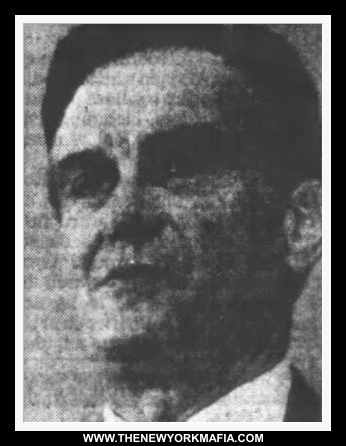
According to Newsday, in 1980, Dillon “went to a meeting sponsored by a charismatic Christian group” because he was “feeling” he “should turn back to God.” At the meeting, he witnessed “healings,” which he quickly added “were alleged,” but he did see “people walk out of wheelchairs, and they prayed in tongues.”
Just two months after attending the meeting, Dillon said he also started “speaking in tongues.”
“I joined a prayer group after that. Seminars in the spirit to prepare you for release of the gift of the Holy Spirit,” he told the newspaper. “When I was prayed over, shortly thereafter, I was able to pray in tongues.”
Dillon lost the election for governor, but he remained the Nassau County District Attorney, an office he held for 30 years until he was defeated in 2005. Denis Dillon died on August 15, 2010. He was 76 years old.

